
That a vertical structure does not hold up you have already seen. The real question is what you replace it with — and the answer has a name, it is not a recent invention, and in live poker it works better than anywhere else.
The four founding elements of a community of practice
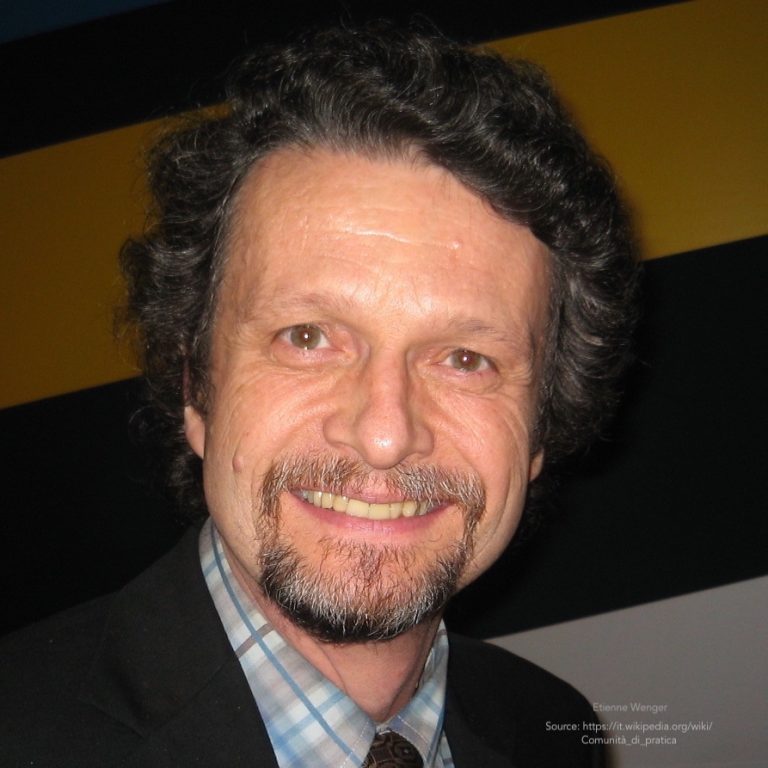
A community of practice is born when people hold together not because of a contract but because of a shared interest. What a community of practice is, and what Wenger observed.
Those who studied it isolated four elements, and they are worth reading with your own room in mind:
- collaborative networks among peers, not chains of command;
- voluntary participation of the members;
- learning and capacity building at the centre, not control;
- knowledge sharing, development of experience, problem solving.
These are four things that have no place in your current structure, and that happen in the room anyway — except that they happen outside the org chart, so you neither govern them nor use them.
Netiquette: rules that enforce themselves
Every community of practice has its own norms, almost always unwritten. And it has its own way of upholding them: whoever does not respect them is isolated by the group itself, with no need for anyone to call them to order from above.
For anyone who manages staff this is a very concrete fact: discipline does not cost you a hierarchy. In a vertical structure every rule needs someone to impose it, and that someone costs — in time, in salary and in friction. In a community of practice the rule is held by the group, because belonging to it is worth something.
Complete knowledge is never one person’s
It is the principle everything else rests on: absolute knowledge is not the preserve of a single individual, and it is reached only by joining the limited knowledge each person holds.
In your room it means this. The dealer knows things the floorman does not see. The floorman knows others that never reach management. Whoever is at the desk knows the players better than anyone. In a vertical chain each of those pieces of information stops at the first superior. In a community of practice they circulate, they are compared, and they produce solutions to the problems that arise from real use — not to those imagined in a meeting.
This is what is called connective knowledge, and what it generates is collective intelligence.
Why live events are the best ground for the Social Enterprise Model
Here is the point that concerns you more than anyone else.
The natural predisposition of the strategic assets of those who organise live poker events, and the intrinsic dynamics of the processes by which those events are designed and delivered, make it possible to exploit the full potential of social enterprise models better than in any other kind of organisation.
It is not a compliment to the sector: it is an observation about how the work is made. A live event is built up and taken down; the teams recompose themselves every time; competences overlap; and the amount of information that passes between people in a few hours has no equivalent in a company that always does the same thing in the same place.
These are exactly the conditions in which a horizontal structure pays off, and a vertical one wastes.
How it was verified, and from where
The Poker Social Enterprise is not a hypothesis applied from the outside. It was built inside the sector, with the method that answers questions about “how”: the study of a real case.
The purpose was not to generalise. It was to understand one concrete case all the way down, in its particulars and in its context, in order to verify whether an organisation built this way really holds.
And the data were collected with the ethnographic method of the participant observer, possible for a simple reason: whoever developed the model organises live poker events. He did not observe the sector from outside — he observed it by taking part in it, with a complete view of the strategies to adopt and of the relationships to coordinate between those inside and those outside. Documents, spaces, people, and along with them the formal and informal conversations no questionnaire collects. The ethnographic method of the participant observer, in full.
Creating value for every stakeholder
It is the declared purpose of the model, and it is also the yardstick by which to judge it: developing the best communication strategies in order to create value for every stakeholder — not only for whoever sits at the top of the org chart.
It means that the dealer, the floorman, the person who handles communication and the person who brings the players in are not costs to be squeezed: they are the people the value comes from, and the model is built so that something comes back to them.
How, exactly, is the next thing to look at: who does what inside this structure, and in which role.